What Urea Percentage Is Right for Diabetic Skin?


Area
Daily UseUrea creams now range from 5% right up to 50%, and the right number depends on what you’re asking the cream to do. For diabetic skin, clinical research points to 25%. Clinical research on urea cream for diabetics specifically shows 25% is where the measurable benefit sits. There’s also a formulation point worth knowing: urea percentage and emollient content work together, and the balance between them is what makes a cream suited to one job or another.
Key Takeaways:
- The market has shifted: Urea creams at 40%, 50% and higher are now widely available, alongside the more established 20% to 30% range.
- Percentage and emollients work together: Higher urea percentages give more exfoliating action, while formulas in the 20% to 30% range leave more room for the emollients that soften, hydrate and gently exfoliate.
- 25% is the strength studied for diabetic skin: A clinical study found it worked better than 10% urea for diabetic foot dryness.
- Diabetic skin has particular needs: Changes to sensation and healing make a well-balanced, studied formula a sensible starting point.
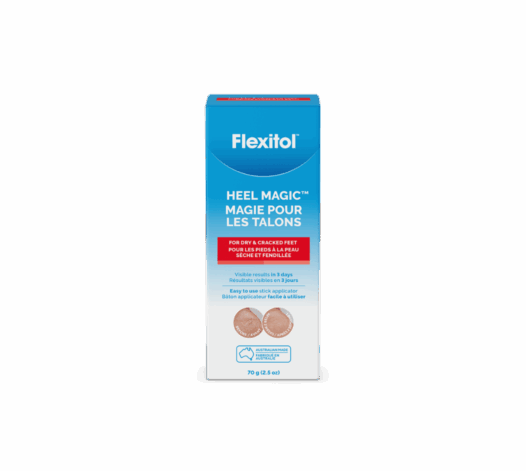
- Flexitol Heel Balm is built at 25%: With an emollient-rich base alongside it, and Diabetes Friendly.
Why are urea creams suddenly claiming such high percentages?
Urea has been a trusted skincare ingredient for decades. Its effectiveness comes from pulling moisture into the skin and softening rough, thickened areas like heels and elbows.
In the last couple of years, a wave of new products has pushed that concentration higher, with some brands marketing 40%, 50%, or more as a stronger, faster fix for dry skin.
That reflects real demand. High-percentage creams are effective exfoliants and have a genuine place in dry skin care. The useful question isn’t which number is highest, it’s which balance suits the skin you’re caring for.
How does urea percentage change what a cream does?
Urea does three things, and the percentage decides which one leads.
Urea is part of your skin’s Natural Moisturising Factor, so your body already knows what to do with it. In dermatology its three functions are described as humectant, barrier-repairing and keratolytic.
- Restores moisture. Urea is highly hydrophilic. It penetrates the stratum corneum and binds water molecules, drawing hydration into the upper layers of the skin.
- Retains moisture. It stimulates structural proteins like filaggrin and skin lipids, strengthening the barrier. A stronger barrier reduces transepidermal water loss, so moisture can’t evaporate as easily.
- Exfoliates. At higher concentrations urea acts as a keratolytic. It dissolves the intercellular matrix holding dead cells together and softens keratin, allowing rough, scaly, thickened skin to shed.
At lower percentages the first two functions lead. As the percentage climbs, the keratolytic action comes forward, which is why a 30% urea heel formula behaves differently on the skin to a 2.5% lip balm.
At lower concentrations it works mainly as a humectant, drawing water into the skin. As the concentration climbs it becomes more keratolytic, lifting away dead skin cells. A 2018 review describes this shift from a moisturizing action at lower strengths to a stronger exfoliating one higher up. That’s why 40% and 50% creams are effective at softening thick callus. A 2020 review notes that tolerability is worth considering at those strengths, particularly on skin that’s already dry or irritated.
There’s a second part to it. Urea shares the formula with emollients and occlusives, the ingredients that soften skin and help hold moisture in. The more of the formula given to urea, the less is available for those. It’s a design choice, and different products make it differently depending on what they’re built to do.
For diabetic skin, where the aim is softening dry, cracked heels while supporting the skin barrier, both sides of that balance matter. Creams in the 20% to 30% range give enough urea to soften and lift thickened skin, with enough emollient content to moisturize alongside it.
Why does diabetic skin benefit from a considered approach?
Diabetes changes the skin in ways that make the choice of formula worth thinking about. It can affect nerves in the feet, making cuts, cracks or irritation harder to feel. The CDC notes this can lead to sores that go unnoticed. Circulation changes can slow healing too.
That’s why a studied concentration is a helpful starting point. The American Diabetes Association lists skin care as a standard part of diabetes management. For more, see our guide to diabetes and your feet.
What does the evidence say about urea percentage for diabetic skin?
A 2003 clinical study tested 10% and 25% urea cream on people with diabetes-related dry, cracked feet. Each person tried both strengths, one on each foot, over six weeks. Both worked, but 25% worked significantly better.
That’s the clearest evidence available for diabetic foot skin, and it points to 25% as the strength that works best, not a stepping stone toward 40% or 50% formulas that haven’t been tested the same way.
How should you use a 25% urea cream on cracked heels?
Follow these steps for the best results:
- Wash and dry your feet first
- Apply high-percentage urea where you need it, on heels and other thick, rough patches, rather than across the whole foot.
- Check your feet daily for new cracks, redness, or irritation
- Catching problems early matters more with diabetes
For more on urea strengths and how to use them, see our guide to incorporating urea into your skincare routine.
Meet Flexitol Heel Balm: the 25% urea cream built for this
Flexitol Heel Balm delivers exactly that strength, and it’s Diabetes Friendly.
- 25% urea, the exact strength shown most effective for diabetic-related dry, cracked skin
- Visible results in 1 day
- Awarded the APMA Seal of Acceptance
- Non-greasy, clinically tested formula
- Also contains Aloe, Vitamin E, Shea Butter, Lanolin, and Tea Tree Oil to help soften and soothe skin while the urea gets to work
- Paraben free
Choosing a urea cream that’s right for diabetic skin
The right urea percentage depends on what you’re asking the cream to do. For diabetic skin, that means enough urea to soften thickened, cracked skin and enough emollient content to keep it hydrated & comfortable.
Flexitol Heel Balm is a urea cream for diabetics formulated at 25%, the strength backed by real evidence. If cracked heels or rough patches are the problem you’re solving for, explore Flexitol Heel Balm.
References
- The Diabetic Foot Journal: Anhydrosis in the Diabetic Foot: A Comparison of Two Urea Creams
- Wiley Online Library, Dermatologic Therapy: Topical Urea in Skincare: A Review
- Wiley Online Library, International Journal of Clinical Practice: Optimizing the Use of Urea in Dermatology
- CDC: Nerve Damage (Diabetes)
- American Diabetes Association: Diabetes and Skin Complications